

- Recherche
- Recherche avancée
Silence and Sign Language in Medieval Monasticism. The Cluniac Tradition, c.900–1200, 2007, 226 p. -
Silence and Sign Language in Medieval Monasticism explores the rationales for religious silence in early medieval abbeys and the use of nonverbal forms of communication among monks when rules of silence forbade them from speaking. After examining the spiritual benefits of personal silence as a form of protection against the perils of sinful discourse in early monastic thought, this work shows how the monks of the Abbey of Cluny (founded in 910 in Burgundy) were the first to employ a silent language of meaning-specific hand signs that allowed them to convey precise information without recourse to spoken words. Scott Bruce discusses the linguistic character of the Cluniac sign language, its central role in the training of novices, the precautions taken to prevent its abuse, and the widespread adoption of this custom in other abbeys throughout Europe, which resulted in the creation of regionally-specific idioms of this silent language.
Référence : 34728.
Anglais
100,50 €
Dans la même époque
Nouveauté
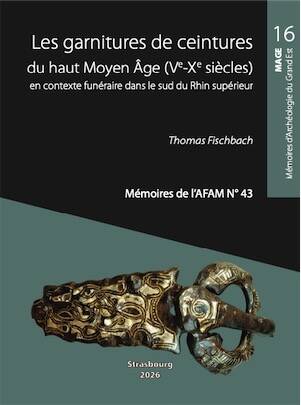
Les garnitures de ceintures du haut Moyen Âge (Ve-Xe siècles) en contexte funéraire dans le sud du Rhin supérieur, (MAGE 16- Mémoires de l'AFAM 43), 2...
Réf : 59106.
Français
40,00 €
Nouveauté

Les carrières de meules de moulins du Mont Vouan (Haute-Savoie), Moyen Âge - XIXe siècle, (DARA 60), 2026. -
Réf : 59035.
Français
40,00 €
Nouveauté
50,00 €